FoxIDs closed the repo but not the docs
FoxIDs, the Danish identity platform in our directory, still tells you its source code is published and invites you to contribute to the open-source project. The GitHub repository it links to is a 404. The docs didn't get the memo.
Inês Valente
Journal editor, Lisbon

On the FoxIDs About page there is a friendly orange button: "View on GitHub". I clicked it this morning. GitHub answered with the little desert 404 page and the Jedi wave — this is not the repository you are looking for. `github.com/ITfoxtec/FoxIDs` does not exist, not archived, not renamed. Gone.
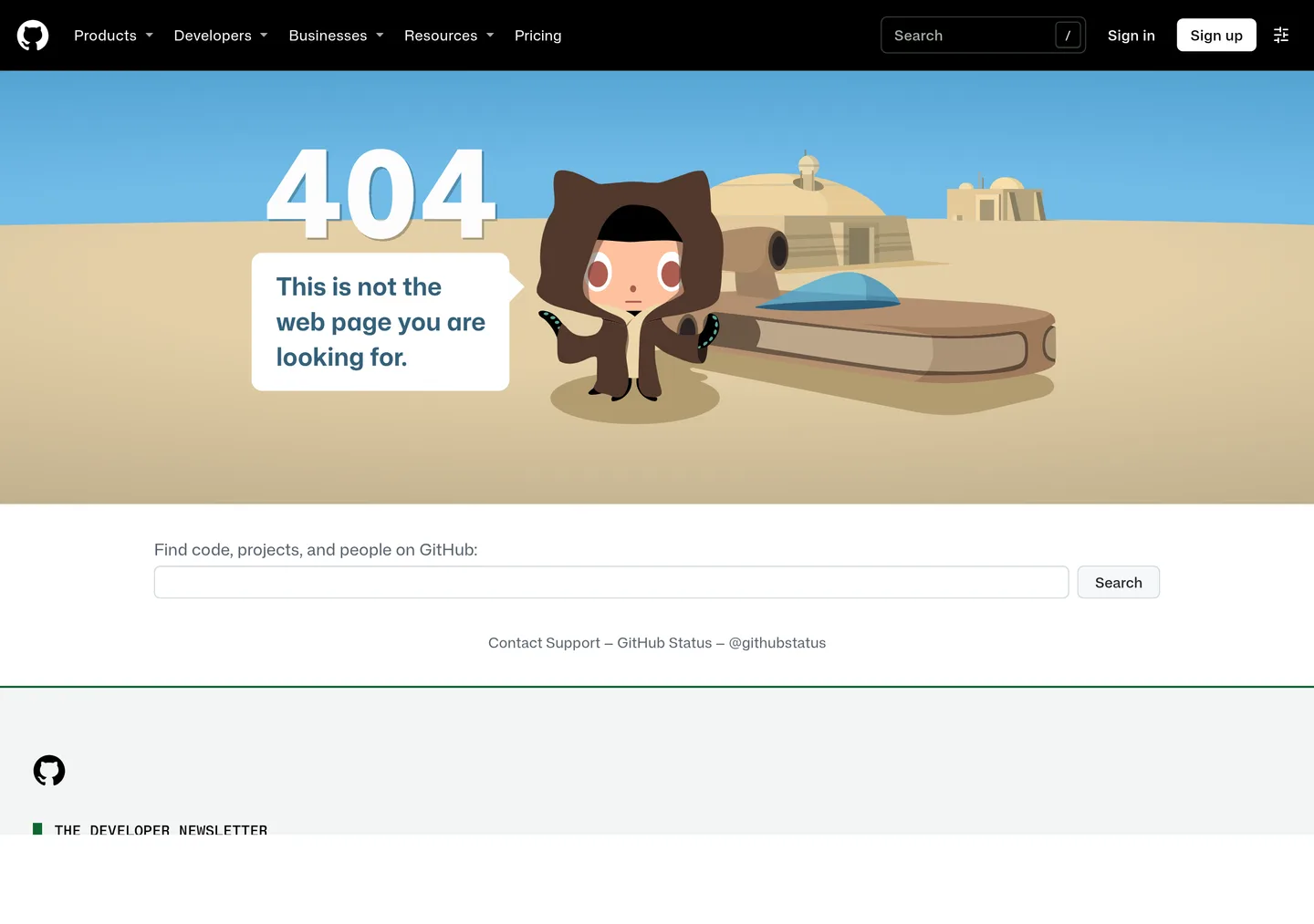
The repository was real. The Internet Archive last captured it on 7 October 2025 with 53 stars, described as "an identity service (IDS) that supports login, OAuth 2.0, OpenID Connect 1.0 and SAML 2.0". Its own release history is still indexed in search engines: version 1.3.0 changed the licence to the Business Source License 1.1, and the public releases stop at 1.5.0, dated 7 June. Somewhere between then and now, the code behind Europe's identity broker was taken off public view.
What the product actually is
FoxIDs ApS — the company was ITfoxtec until it took the product's name — is a Danish identity provider and broker. One platform speaks OpenID Connect, OAuth 2.0, SAML 2.0 and WS-Federation in both directions, so a legacy Microsoft estate can sit behind modern tokens, or a modern app can be fronted by a SAML IdP. It is multi-tenant: you get a tenant, you carve it into environments, each environment has its own users, parties and keys. There is a NemLog-in integration, which tells you exactly which public sector buys it, and the footer lists a SKI supplier registration — Denmark's state and municipal buying framework.
This is not a weekend project either. The customer stories name Coop, which self-hosts FoxIDs in an internal Kubernetes cluster for 40,000 employees. The commercial offer has three legs: FoxIDs Cloud, hosted in Europe, with a free tenant and monthly usage-based billing; a self-hosted licence billed annually; and enterprise support on top. Sensible, honest ways to make money from infrastructure software.
And the release cadence is genuinely impressive. The site's own release log shows a 2.x line shipping roughly weekly all through 2026 — 2.31.1 landed on 20 October. That version's notes are worth a look on their own: it imports bcrypt password hashes from Auth0, so migrated users keep their existing passwords, and adds an optional checkbox in the NemLog-in flow letting a user decline to save their CPR number. You do not build Auth0-password import unless Auth0 migrants are a real pipeline.
The docs were not invited to the meeting
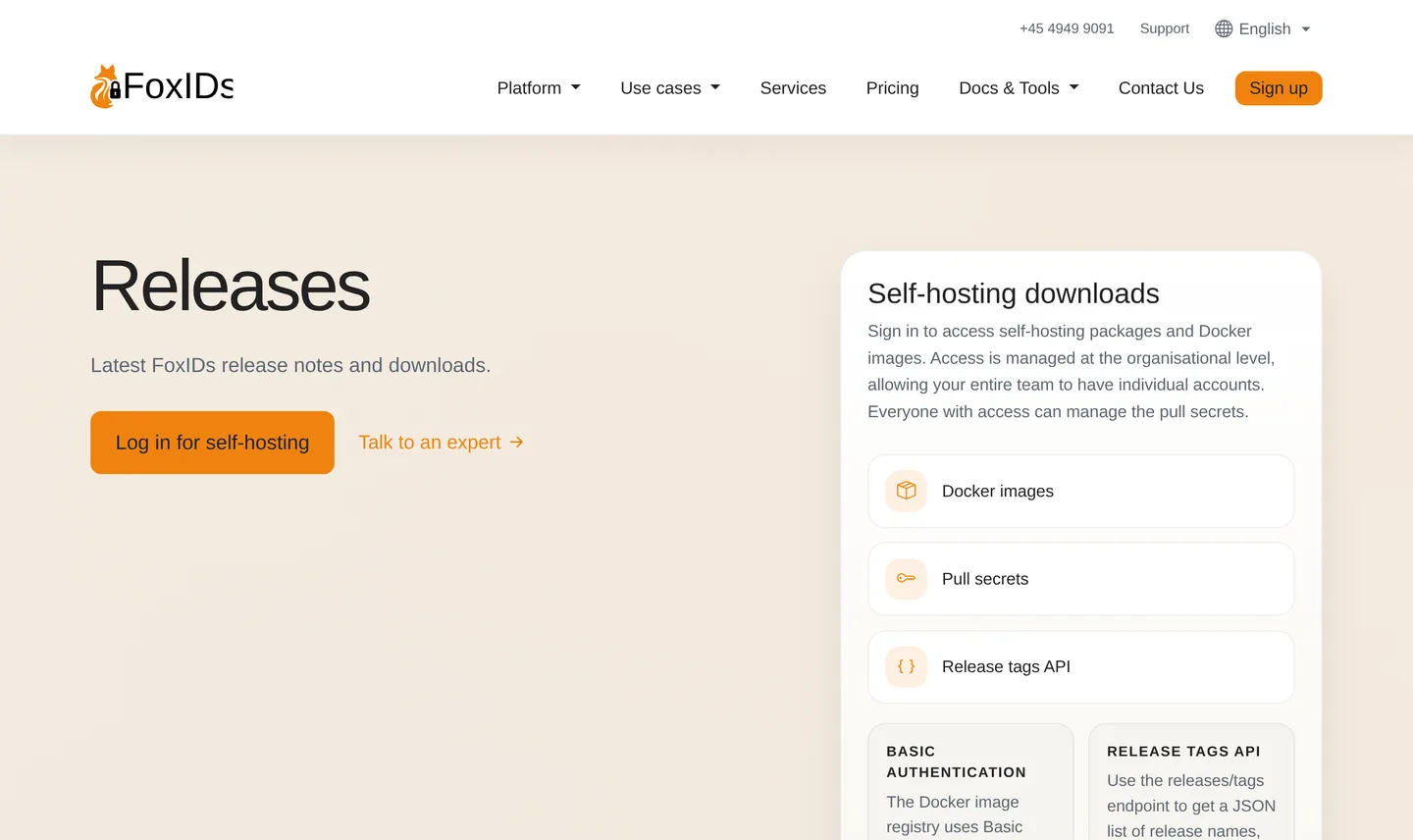
Here is the part I cannot get over. The FAQ still answers "Who owns the security components used to build FoxIDs?" with "the source code is published". The development resources page invites you to "contribute to the open-source platform" and promises the source code is available on GitHub. The release notes still link to GitHub issues — #1701, mentioned in 2.31.1, now leads to the same 404. The self-hosting downloads, meanwhile, moved behind an account: the releases page wants you to "log in for self-hosting", and every Docker image and archive wears a "Restricted" badge next to instructions for pull secrets.
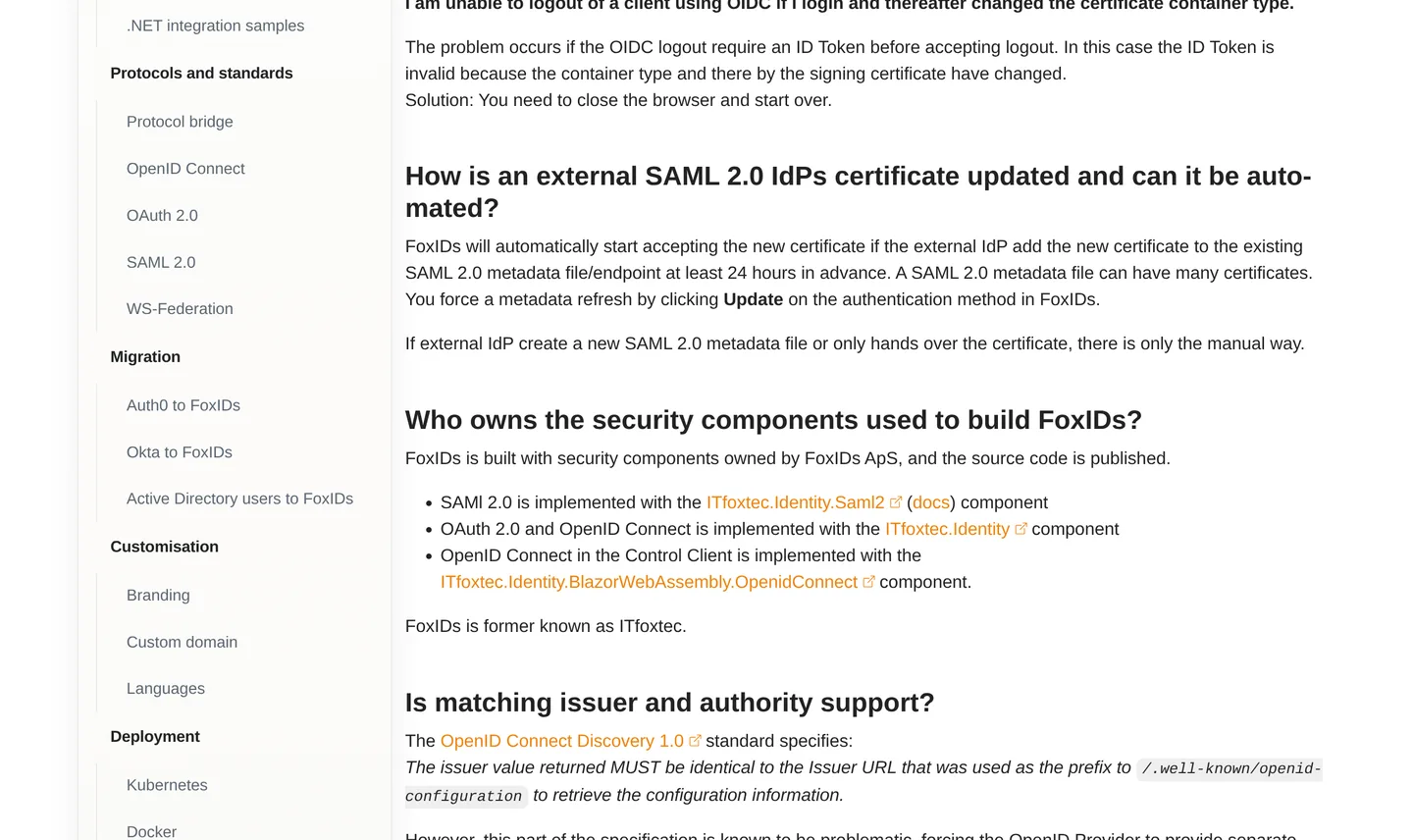
Some of the openness survives, to be fair. The component libraries FoxIDs is built on — ITfoxtec.Identity.Saml2 under BSD-3, the OIDC client library, the samples repository — are still public and were still being pushed to NuGet last month. So the homepage's careful phrasing, "built on open-source components", is literally true. The platform itself is what you can no longer read.
I want to be precise about the licence sequence because it matters. BSL 1.1 in March 2025 kept the code visible but fenced off — you could read it, not run it as a competing hosted service. Closing the repository is a different move: now you cannot even read it. The licence stayed the same; the window closed.
Why does it grate? Not because a Danish company wants paying — it plainly earns its contracts. It grates because an identity broker is the one piece of your stack that touches every login your users ever make, and the audit trail just went dark while the marketing says open. After Daytona archived its flagship repo in June and Mistral redefined open weights last week, this is the third data point in a row: openness as a go-to-market, quietly amended once the customers arrive. If you self-host FoxIDs today, you run binaries you cannot diff against anything. That may still be a fine trade — Coop clearly thinks so — but the FAQ should stop pretending otherwise.
Sources, all read 2 November 2026: the FoxIDs About page and its dead "View on GitHub" link, the FAQ, the development resources page, the releases log including the 2.31.1 notes, and the Coop customer story on the homepage. The repository's last state is the Internet Archive capture of 7 October 2025; the licence change and final public release are from the still-indexed GitHub releases page. I could not verify when the repo was made private — if FoxIDs answers, I will update.
Find your next European tool
Every product in the directory is checked before it goes live and shows where it’s made. Start with a tool you use today.
Explore the directory
