Lesson Dino names the model, and the price of free
Lesson Dino, a lesson planner run from Malta, looks your topic up before it writes and numbers every fact with its source. Its privacy policy goes further than the marketing: it names the model (Meta's Muse Spark), admits Meta may keep your prompts during the beta, and tells you exactly which service sees what.
Inês Valente
Journal editor, Lisbon

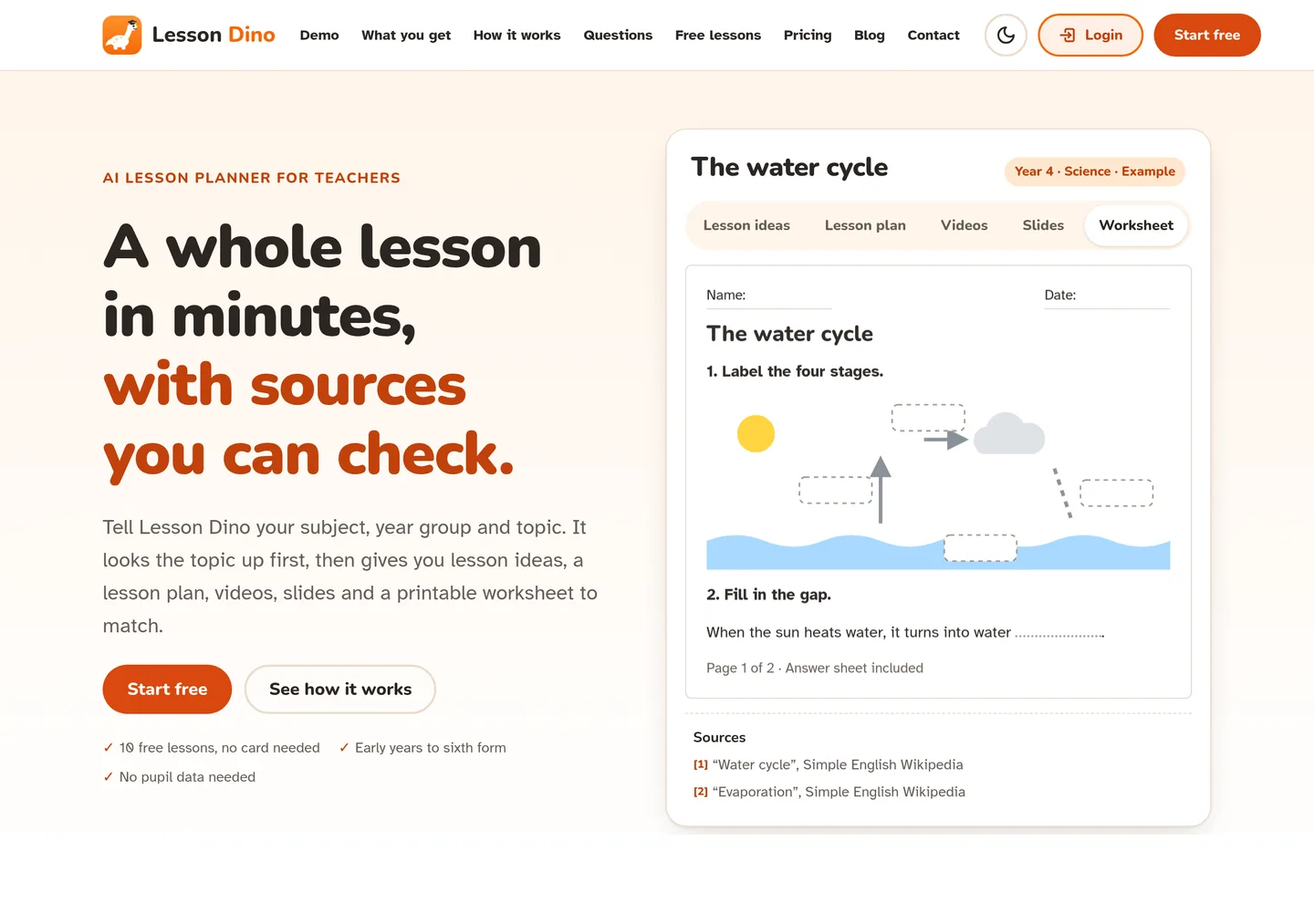
Two submissions from Malta arrived within three days of each other this week. The second one is Lesson Dino, an AI lesson planner for teachers, and it does something the category usually skips: it looks the topic up first. You give it a subject, a year group and a topic, and its own search server queries DuckDuckGo, Google, Brave, Qwant and Yahoo — sometimes through a proxy so the engines never see you — then it reads Wikipedia, curriculum sites and the Internet Archive itself. Only then does it write. Every fact in the finished lesson is numbered with its source, and when the search comes back thin, it says so instead of filling the gap.
What you get for one topic is five matching parts: nine lesson ideas to pick from, a timed plan with an exit ticket, YouTube clips annotated with the exact stretch to play and what to ask afterwards, a slide deck in eighty designs or your school's own template, and a printable A4 worksheet with an answer sheet. The beta is free — ten lessons per new account, no card, and you can ask for more. The pricing page promises prices will be published before the beta ends and that nothing will start charging without warning you first and asking you to agree.
The privacy policy is the architecture doc
Here is what the directory card can't tell you. Lesson Dino's privacy policy, dated 16 October, names the model it rents: Muse Spark, made by Meta, reached through a service called OpenCode. Then it says the quiet part out loud — under the model's terms, Meta may keep the requests and answers and use them to train its future models. Your name, username and email don't go; whatever you type into a lesson does. That single honest sentence is why the whole product is designed around never needing pupil data, and why the policy begs you not to type a pupil's name anywhere, including in an uploaded template.
Read the rest of the page and it reads like the system diagram most products hide. The server sits on Google Cloud in Sweden with Supabase on the same host. Cloudflare serves the site; Resend sends the mail. Slide photos come from Pixabay, Openverse and Wikimedia Commons — mostly copied to Lesson Dino's own server first — and symbols from ARASAAC and Mulberry. YouTube plays in privacy-enhanced mode. The marketing site sets no cookies, runs no analytics and self-hosts its fonts; the country suggestion on sign-up comes from a DB-IP database kept locally so your address isn't sent anywhere. Someone sat down and answered, line by line, who sees what.
I have been grumbling in this notebook that European AI products keep ending up as shells on American models. Lesson Dino is another one — but it is the first I've read that tells you so on its own privacy page, designs the product so the compromise can't touch a child, and cites Wikipedia like a conscientious student while it's at it. If a classroom tool has to rent a brain, this is what renting it honestly looks like.
Find your next European tool
Every product in the directory is reviewed by a person and shows where it’s made. Start with a tool you use today.
Explore the directory
