Proxmox VE 9.2 Ships Two ISOs
Same 9.2. Two installers. The ARM file is for NVIDIA Grace Hopper and Vera, not a Raspberry Pi. HA and live migration are in the ISO. You pay per occupied CPU socket for the enterprise repo and tickets.
The EuroMakers Editorial Team
Researching European software

The Journal · Made in Europe
The Proxmox VE downloads page for Virtual Environment now leads with a file that was not there in May. For ARM64: Proxmox VE 9.2 ISO Installer. Version 9.2-1-arm64. 1.50 GB. Last updated 5 August 2026. SHA256 printed on the card. Scroll one row and the other installer is waiting: Proxmox VE 9.2 ISO Installer, the x86 image, with the 9.2 datasheet still stamped 21 May.
Same release number. Two images.
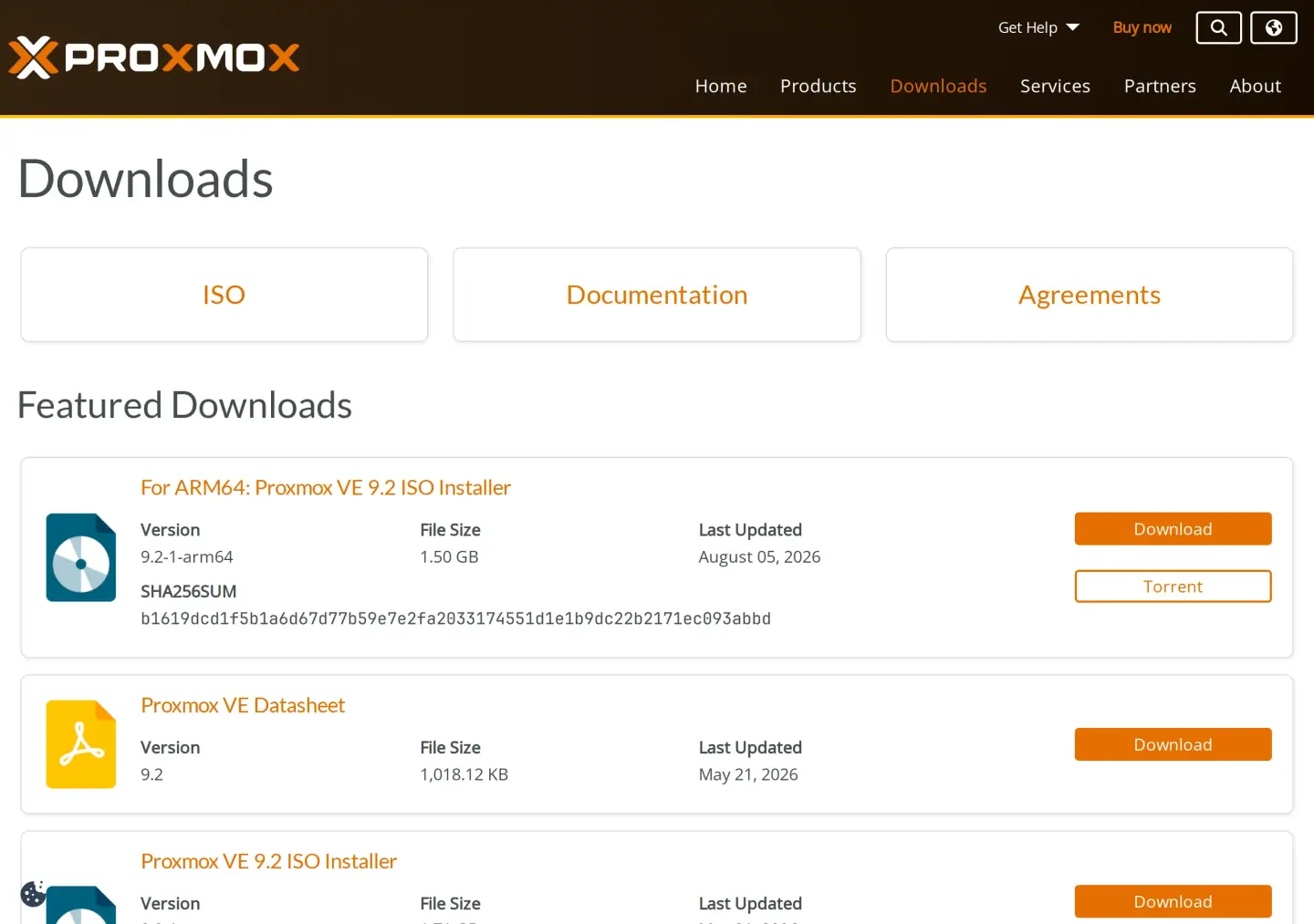
Vienna, 5 August. Their press line, not a forum rumor:
First official Arm64 release extends Proxmox VE beyond x86-64 architectures.
— proxmox.com, 5 August 2026
Proxmox Server Solutions GmbH in Vienna has shipped this hypervisor since 2005. The plot is the ISO. You write it to a USB stick. You boot a server. A browser talks to the box. KVM virtual machines and LXC containers sit on the same host, with software-defined storage and networking if you want the disks and the network in the cluster too.
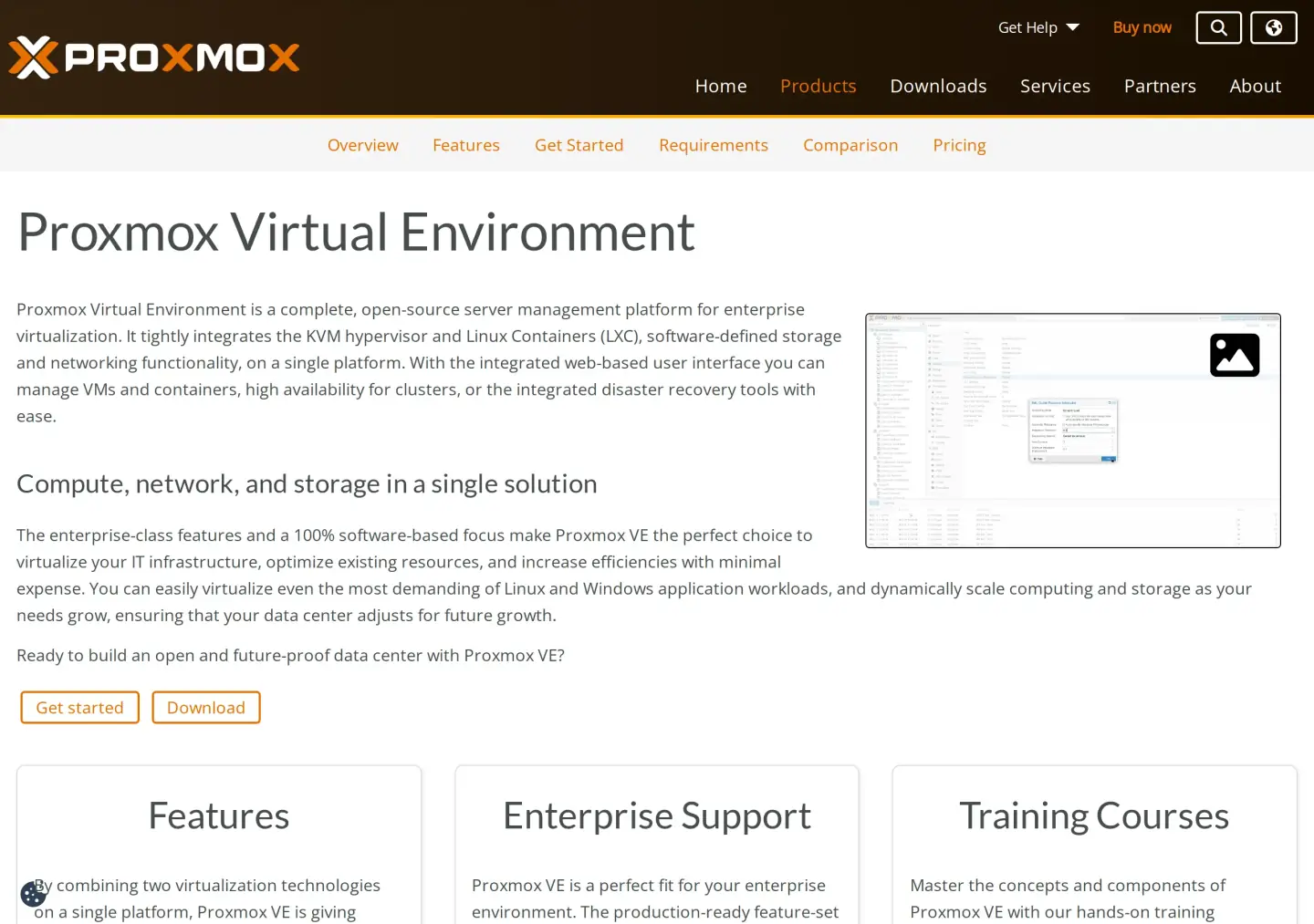
Their own sentence for what you installed:
Proxmox Virtual Environment is a complete, open-source server management platform for enterprise virtualization. It tightly integrates the KVM hypervisor and Linux Containers (LXC), software-defined storage and networking functionality, on a single platform.
— proxmox.com/en/products/proxmox-virtual-environment/overview
The ISO is the feature list
9.2 for x86 arrived on 21 May: Debian 13.5 Trixie, Linux kernel 7.0, QEMU 11.0, LXC 7.0, ZFS 2.4. A Dynamic Load Balancer that can migrate HA guests to even out a cluster. HA arm and disarm so a maintenance window does not fence a node you meant to keep. Custom CPU models under Datacenter. Ceph Tentacle 20.2 as a stable option next to Squid 19.2. The ARM build, three months later, is that same 9.2: same packages, same release cycle, same web UI. Their CTO, on the day the second ISO shipped:
Our goal was not simply to run Proxmox VE on a new architecture, but to deliver full feature parity: KVM, networking, clustering, ZFS, and Ceph all behaving exactly as our users expect from our x86-64 builds.
— Thomas Lamprecht, Proxmox Arm64 press release, 5 August 2026
You can also install on top of Debian 13. The May press release is blunt about what is in the file:
Users can obtain a complete installation image via ISO download, which contains the full feature set of the solution and can be installed quickly on bare-metal systems using an intuitive installation wizard.
— Proxmox VE 9.2 press release, 21 May 2026
Pricing does not lock HA. Open the FAQ on the live shop:
No. High availability, live migration, clustering, backup, software-defined storage, networking, and all other Proxmox VE features are available at every level. Plans differ by technical support entitlement, ticket allowance, and response time.
— proxmox.com pricing, Are Proxmox VE features limited by subscription level?
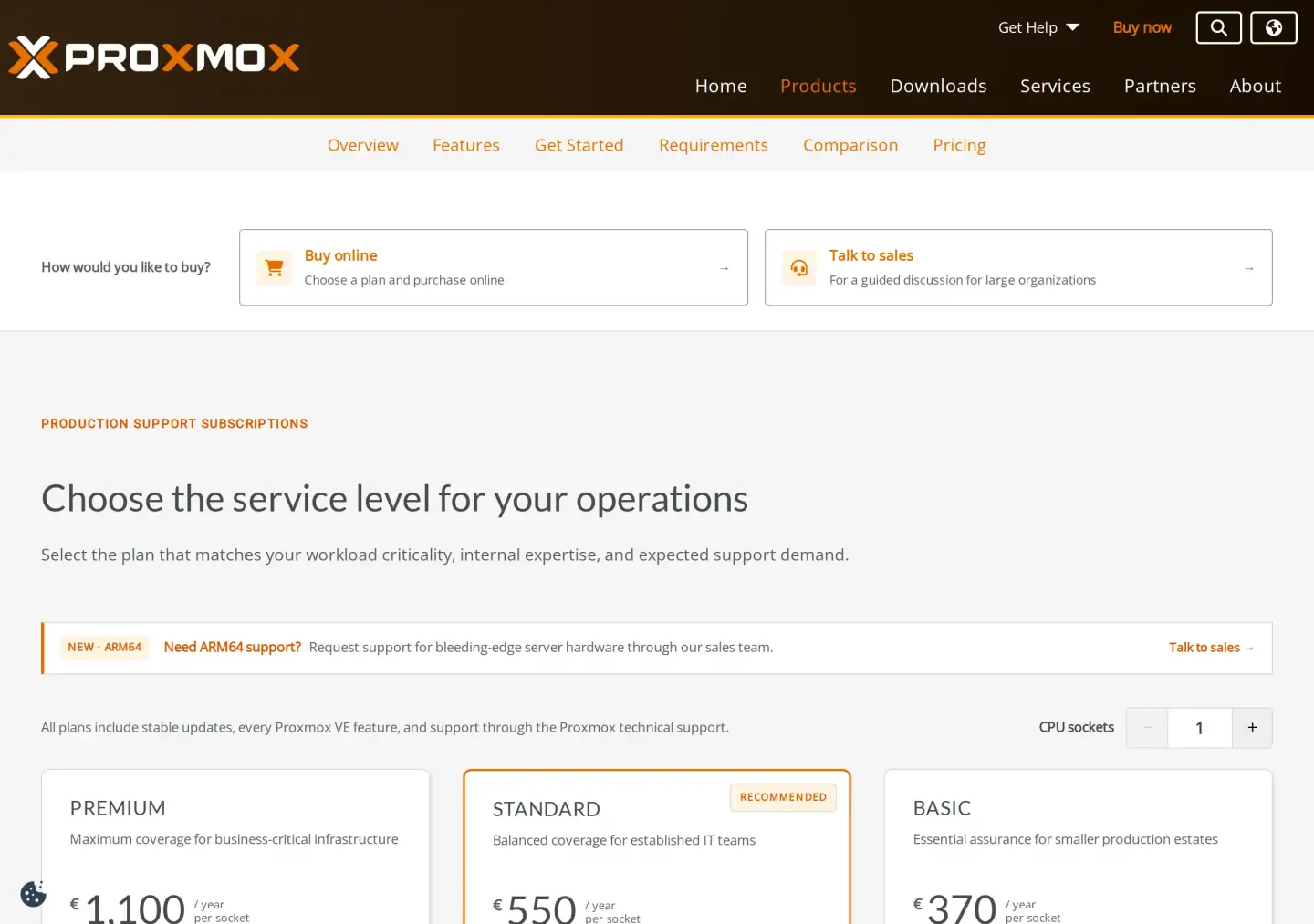
What you buy is coverage. Occupied physical CPU sockets, not cores. Empty slots do not count. Every node in a cluster, same level. Community is €120 a year per socket: the enterprise repository, no tickets, labeled for home labs, training, evaluation, non-critical workloads. Basic is €370, three tickets, one business day. Standard is €550, ten tickets, four hours, SSH. Premium is €1,100, unlimited tickets, two hours. Net prices. Austrian business days, Monday through Friday, 07:00–17:00 CET/CEST. That is the vendor desk. Not a 24/7 NOC.
The ARM ISO is not a Pi
Fully supported ARM hardware, from their docs, is NVIDIA Grace Hopper and NVIDIA Vera. Other UEFI ARMv9-A or newer is best-effort. ARMv8-A generally works, also best-effort. The host must boot UEFI and describe itself through ACPI. Device-tree-only boards are out. Their sentence, on the requirements wiki, is the one the catalog card will not print:
Device-tree-only single-board computers, such as the Raspberry Pi, are not supported.
— pve.proxmox.com/wiki/System_Requirements
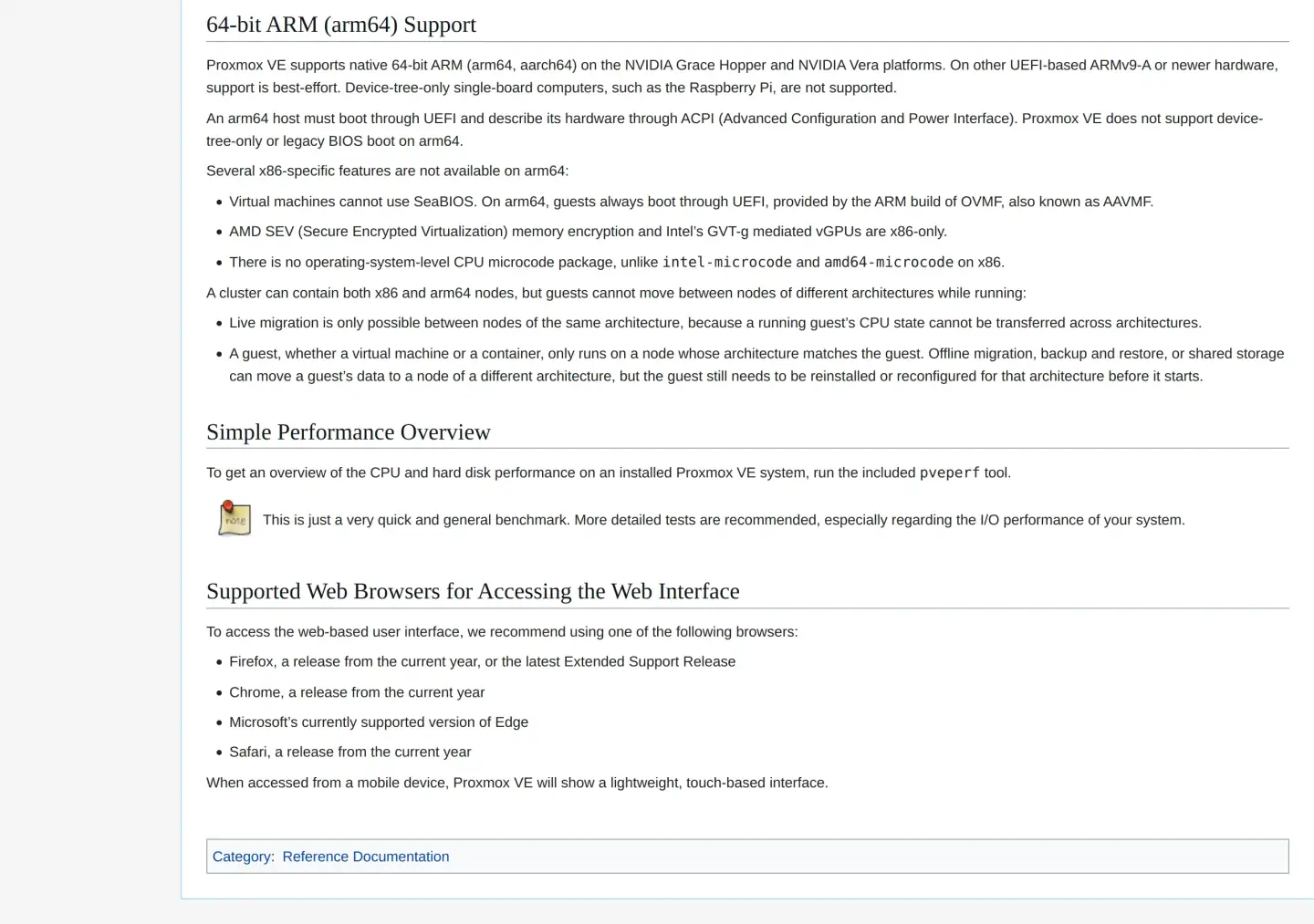
Guests boot through AAVMF, the ARM build of OVMF. SeaBIOS is x86. AMD SEV and Intel GVT-g stay x86. There is no intel-microcode package to mirror. A cluster can hold both architectures. That is not the same as support. Live migration cannot cross the line. Move a guest's disk to the other arch and you still reinstall or reconfigure it before it starts. The forum FAQ is explicit: mixed-architecture clusters are not officially supported.
Who should not download this. Anyone whose ARM plan is a Raspberry Pi: this file is not that. Anyone who needs to live-migrate a Windows VM from an Intel node onto Grace: the CPU state does not move. Anyone who wanted a hosted vSphere replacement you log into: this is software you install, then you are the operator. Anyone whose policy needs vendor tickets at 2 a.m. on a Sunday: the clock on the contract is Vienna business hours.
If the job is KVM and LXC on hardware you already rack, and you can live with sockets for the repo and a human in Austria for the tickets, start with the listing, then read Downloads next to Pricing. The ARM card will show you 5 August. The hypervisor is what you are buying.
New to the EuroMakers Journal? Start with how the Journal works.
Find your next European tool
Browse a curated directory of software made in Europe across every category your team relies on.
Explore the directory
