The European Desk That Stays Clear
Notes, paperwork, and project rooms are sibling jobs — not three copies of the same productivity app. Here is how to assemble a European desk that finishes work and stays calm.
The EuroMakers Editorial Team
Researching European software

The Journal · Made in Europe
Productivity shopping often starts as ambition and ends as clutter. A new notes app. A new form builder. A new project suite. Each tab promises to finish the week. By Friday the desk is full — and still unfinished.
The EuroMakers Journal already sorted the personalities: notes and knowledge tools, forms and signing, project rooms. This essay is the next question. How do those European seats sit together so the desk stays clear — and still earns a place in an ordinary week?
Name the seat before the logo
A notes tool, a form or signing product, and a project room are sibling jobs. They sit next to each other. They do not replace each other. When three products pretend to be the same productivity surface, you get tabs you abandon, migrations you postpone, and habits that bounce by October.
- Thinking. Personal graph, local-first vault, team wiki, or tasks that get finished? The notes and PKM guide frames the job before the brand.
- Paperwork. Do you need answers or a signature? Tally collects replies; Documenso closes agreements — see the forms and e-sign guide.
- Rooms. Is the friction a shared project home — tasks, chat, files, meetings — or a calm personal list? The project rooms guide starts with the collaboration job.
None of those sentences ask which European productivity product is "best." They ask what work you are hiring for. Made in Europe is the quality bar — craft, clarity, and products shaped by makers across the continent working as one premium label — not a rule that one vendor must own every seat.
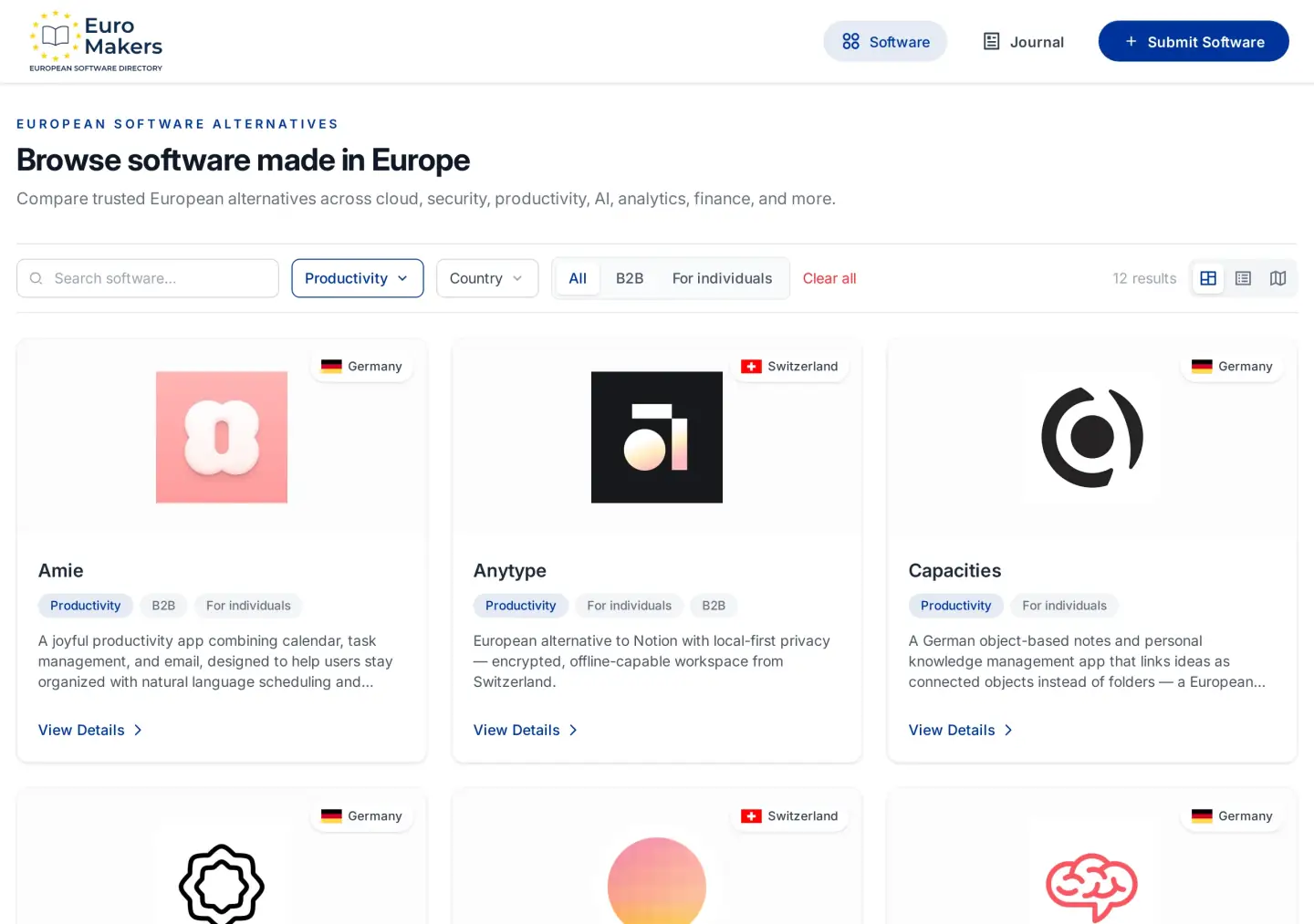
How a desk gets noisy
Productivity stacks bounce when too many products arrive at once and compete for the same morning. The desk looks European. The week still feels unfinished.
- A notes app pretending to be a project room. Object graphs and wikis hold thinking. They rarely replace chat, permissions, and meetings for a client delivery.
- A form tool stretched into a workspace. Beautiful forms finish answers. They are not where the team lives all week.
- A project suite swallowing personal lists. Rooms earn their keep for shared work. Personal todos often want something calmer — Superlist or Vikunja, not another crowded board.
- One European logo for every paperwork job. Answers and signatures are neighbours, not twins. Buying one "paperwork app" is how Tuesday stalls twice.
A clear desk is one you return to — because each seat finishes a job, then gets out of the way.
Fill the desk in a fair order
If you are assembling the desk from scratch, do not open three trials on the same Monday. Borrow the sticky-swap rule: one deliberate European swap that survives an ordinary week.
- Start with thinking if ideas already leak into chat, sticky notes, or a wiki that never matches how you think. Migrate the ten notes you open daily first.
- Add paperwork once you can name the stuck job in one sentence — answers or signatures. Leave the other paperwork seat empty until that friction is real.
- Choose a project room when the shared work is the real mess — tasks, chat, files, and meetings scattered across five tabs. One room per team is usually enough.
- Only then consider encrypted file storage as a neighbouring seat, if confidential documents are the friction — not because everyday sync habits suddenly need a European twin. See the encrypted files guide.
That order respects attention. Thinking first. Paperwork second. Rooms third. Files when the documents demand it. Each seat gets a fair Tuesday before the next logo arrives.
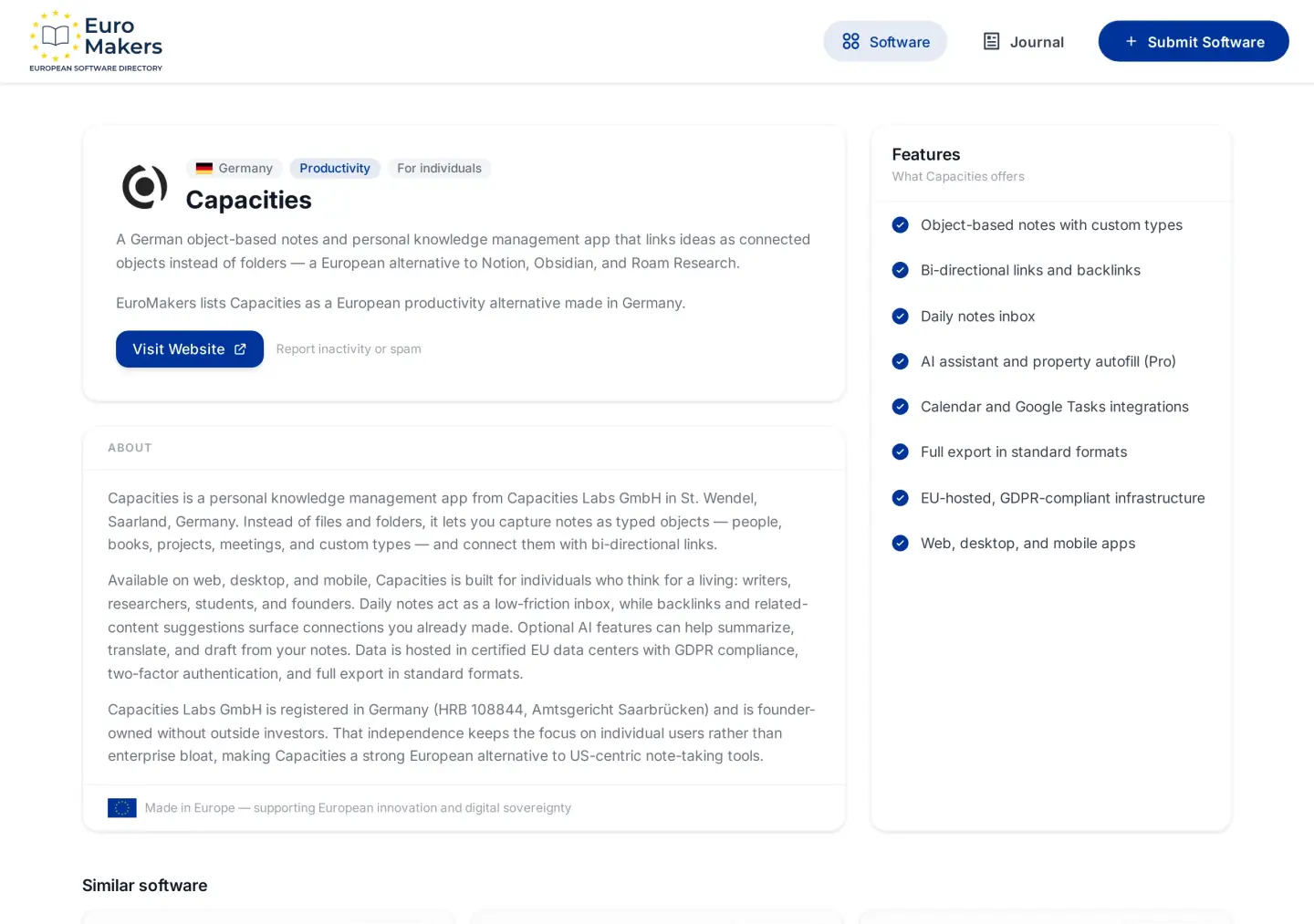
Specialists on one desk — without forcing a suite
Unlike mail, vault, and tunnel — where Europe's clearest suite story can hold several jobs — Productivity rarely wants one house for everything. A personal knowledge graph and a secure project room are different crafts. That is the honest shortlist pattern from suite or shortlist: coherence where jobs sit close, specialists where they do not.
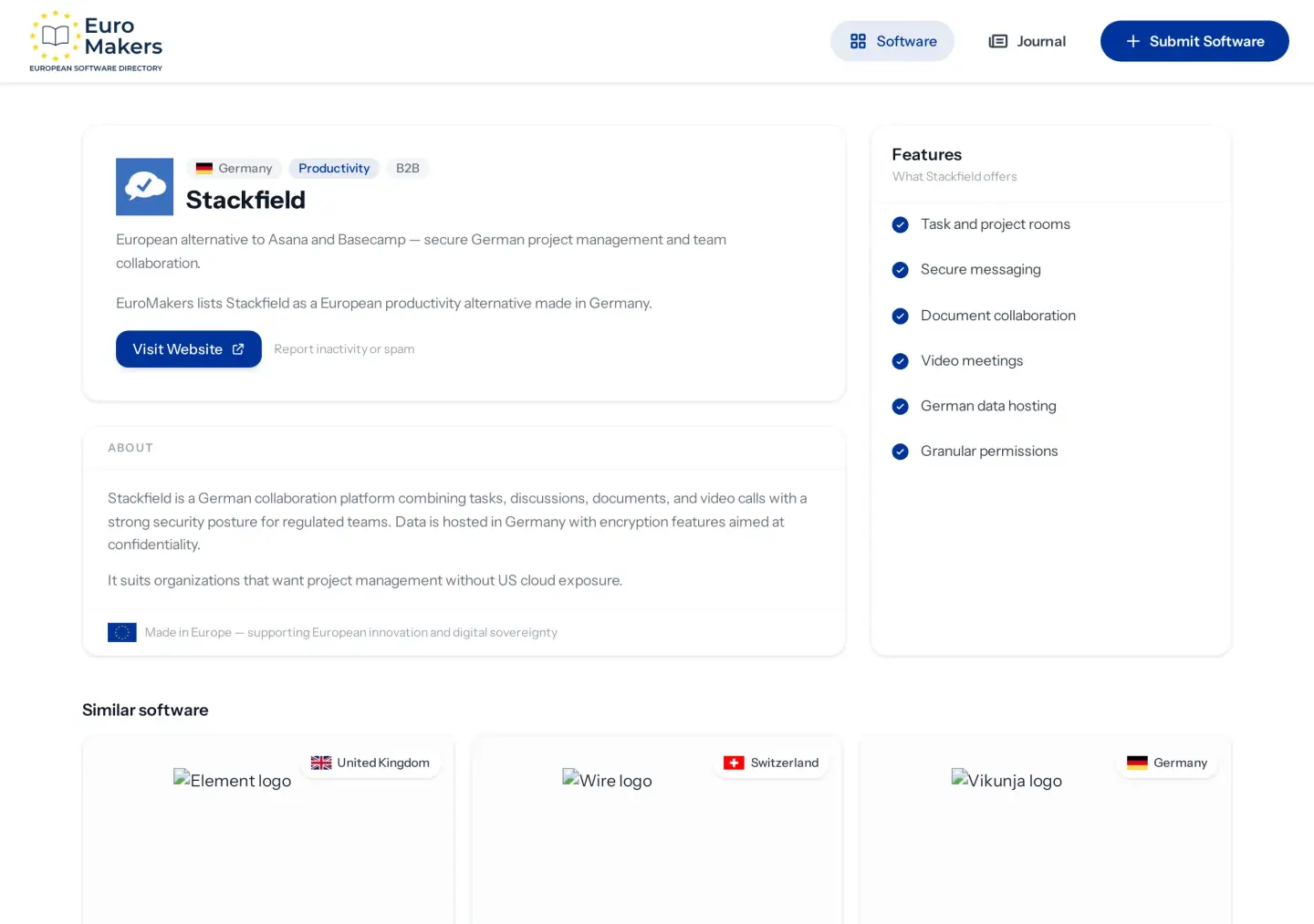
So mix without guilt. Capacities or Anytype for personal thinking. Nuclino or Slite when the wiki is the team job. Tally when the week needs answers. Documenso when it needs a signature. Stackfield when the team needs a room you can explain. Calm lists stay on Superlist or a self-hosted Vikunja board — neighbouring seats, not failed rooms.
The paperwork pair that should not merge
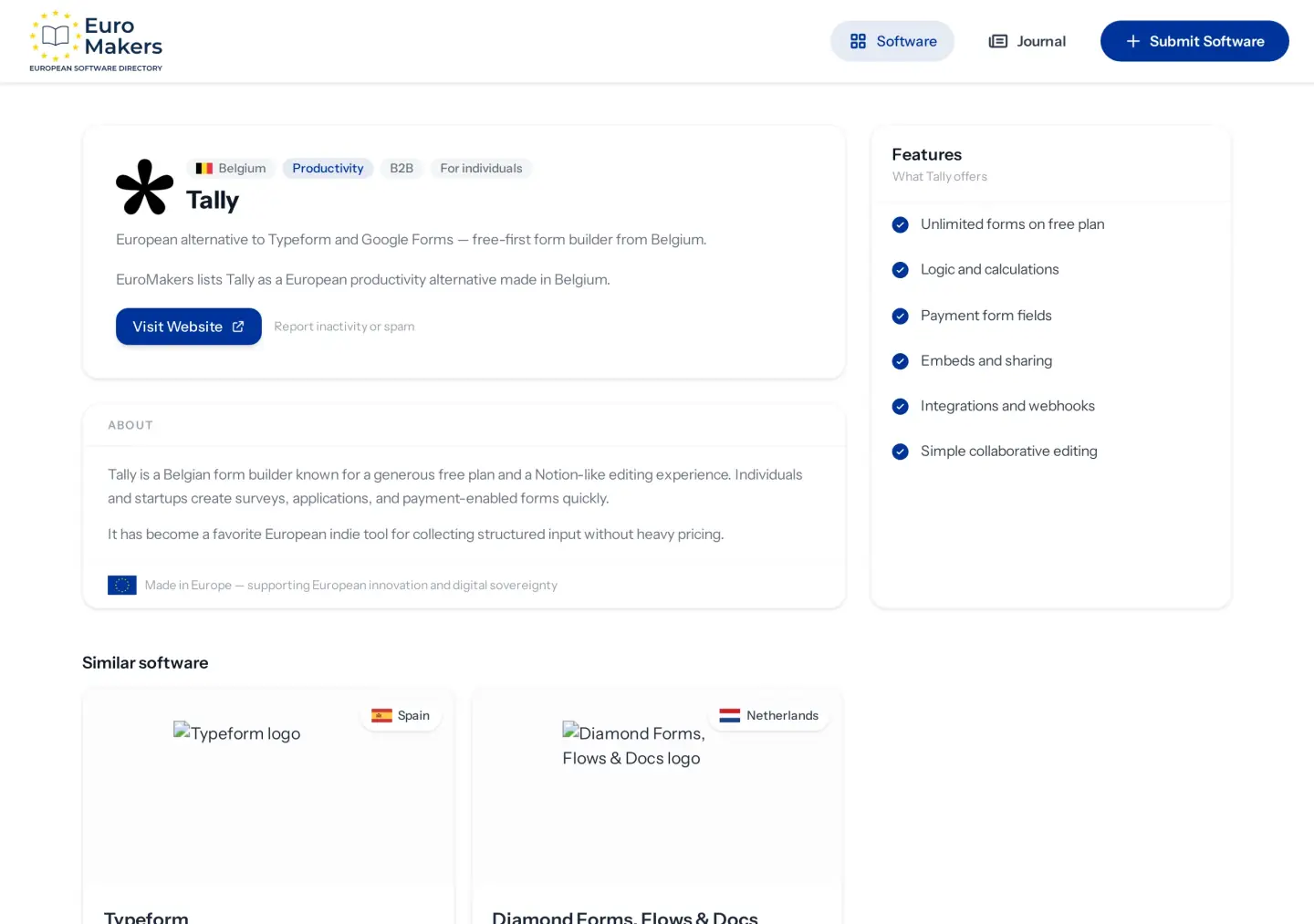
Forms and signatures look like one paperwork shelf from a distance. Up close they are different finishes. A survey that never ships is an answers problem. A contract that sits in three inboxes is a signing problem. Europe has strong options for both — Tally from Belgium for forms, Documenso from Germany for open-source signing — and stretching either into the other's job is how the desk gets noisy again.
Skip a second paperwork seat when the first job is not yet boringly reliable. A clear desk prefers one finished hire over two half-migrations.
A five-minute clear-desk check
- List every productivity product you currently pay for or leave half-installed.
- Label each one thinking, paperwork (answers or signatures), rooms, lists, or files — or "noise" if you cannot name the job.
- Keep one clear hire per seat. Retire duplicates that share the same Tuesday.
- If a seat is empty and already painful, open the Productivity category and shortlist two European options — not seven.
- Trial only the noisiest empty seat for one week. Leave the rest of Europe on the shelf until this hire feels boringly reliable.
"Made in Europe" on a clear desk means craft you can live with — fewer abandoned tabs, fewer tools competing for the same morning, more finished work from makers across the continent working as one premium label. Use the Journal to choose the shape of the desk, then use the directory to fill the seats. If a seat still feels thin for your hybrid, tell us.
Thinking. Paperwork. Rooms. Maybe files. Hire the jobs. Keep the desk clear.
Find your next European tool
Browse a curated directory of software made in Europe across every category your team relies on.
Explore the directory
