The European shop shelf that opens on Tuesday
Ambitious houses, open-source stores, frameworks, shop windows, and fashion houses are sibling jobs — not five copies of the same cart. Here is how to assemble a European shop shelf that actually opens.
The EuroMakers Editorial Team
Researching European software

A shop rarely fails in a demo. It fails on Tuesday at 10:04. The catalogue still lives in a spreadsheet. A wholesale order cannot share stock with the public site. An agency is dressing a beautiful storefront while checkout already works in another tab. The pain is not another storefront demo. The pain is five selling jobs wearing one shopping bag.
The EuroMakers Journal already sorted the personalities in the ecommerce tools guide: Shopware, PrestaShop, OXID eShop, Sylius, Saleor, Vue Storefront, commercetools, and Centra. This essay is the Tuesday question. How do those European crafts sit together so the shop opens — and still earns a place in an ordinary week?
Five crafts, one cart they should not share
An ambitious house, an open-source store, a framework, a shop window, and a fashion house are sibling jobs. They share a week. They do not share a cart. When five products pretend to be the same aisle, you get half-migrated catalogues, windows on empty warehouses, and a Tuesday that still does not open.
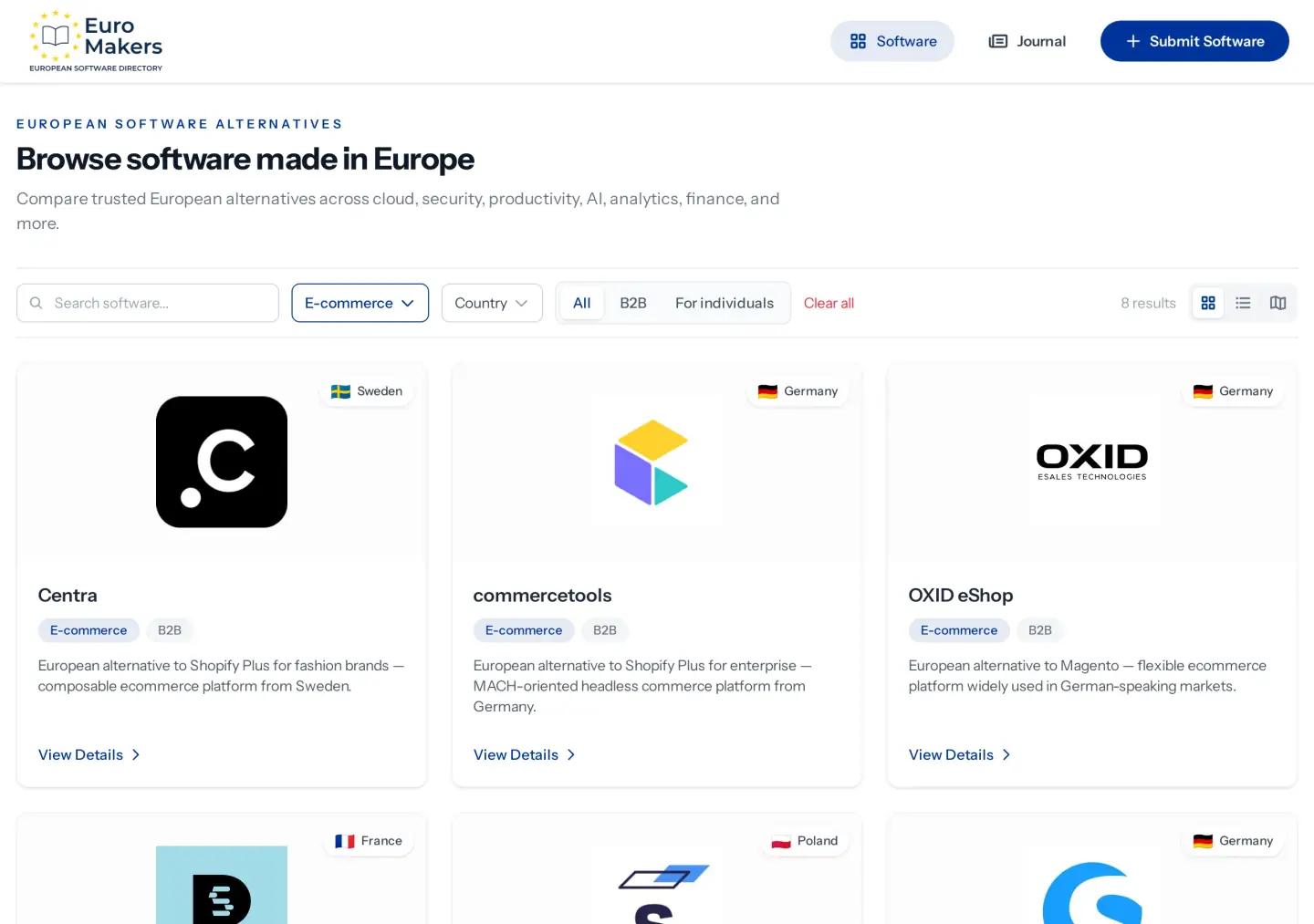
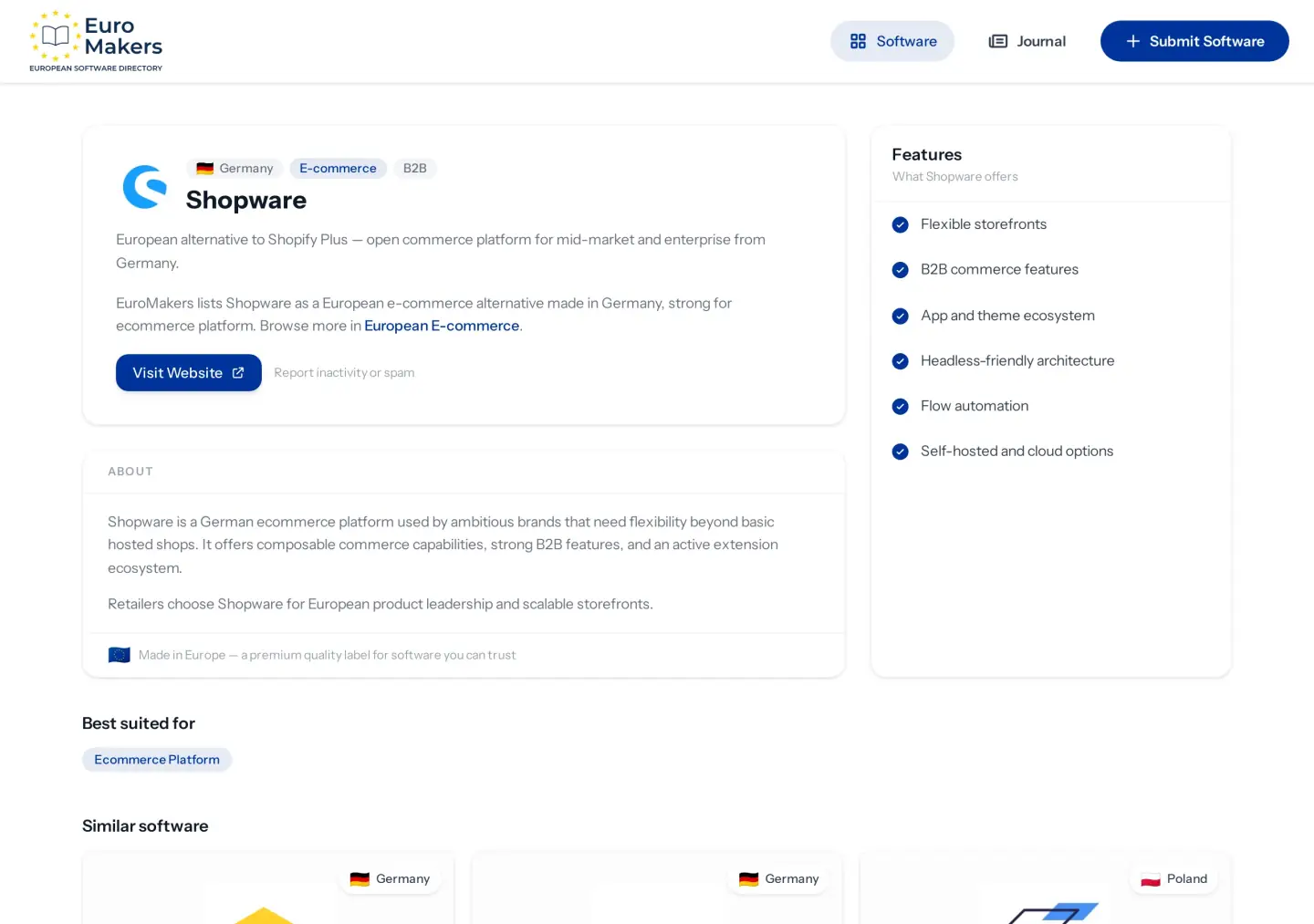
- House. An ambitious commerce product with storefronts, B2B, and an ecosystem you can grow into? Shopware is the German house for that job — see the ecommerce tools guide. OXID eShop is the neighbouring DACH custom shop when a partner already knows the build.
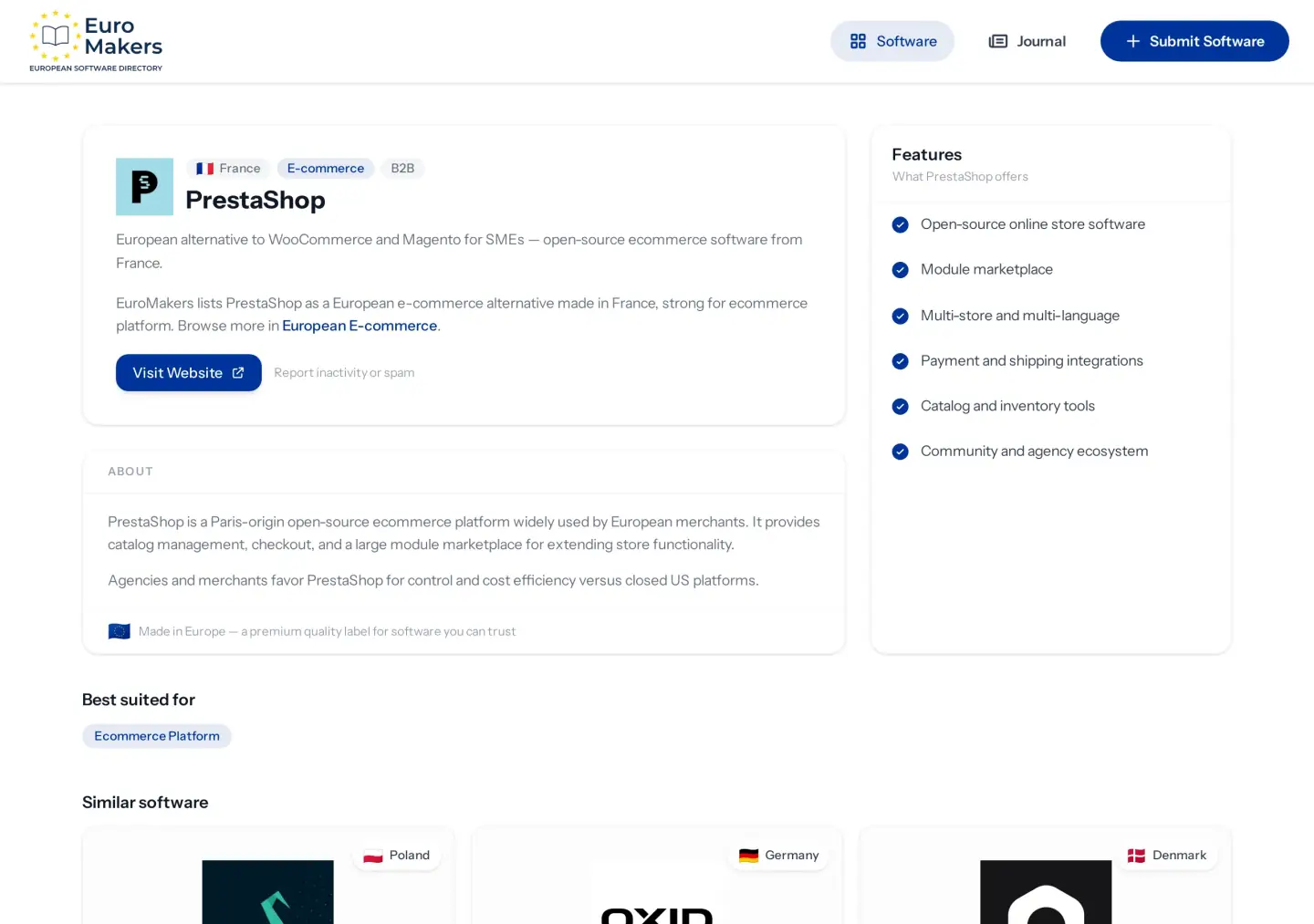
- Open-source. A store you can own: catalogue, checkout, modules, without a rented shop you cannot leave? PrestaShop is the French SME seat.
- Framework. A shop built around a workflow no theme will hold? Sylius is the Polish Symfony craft; Saleor is the GraphQL engine when the storefront is yours to design.
- Window. A storefront layer in front of a backend you already run? Vue Storefront is the Polish window — the glass, not the warehouse.
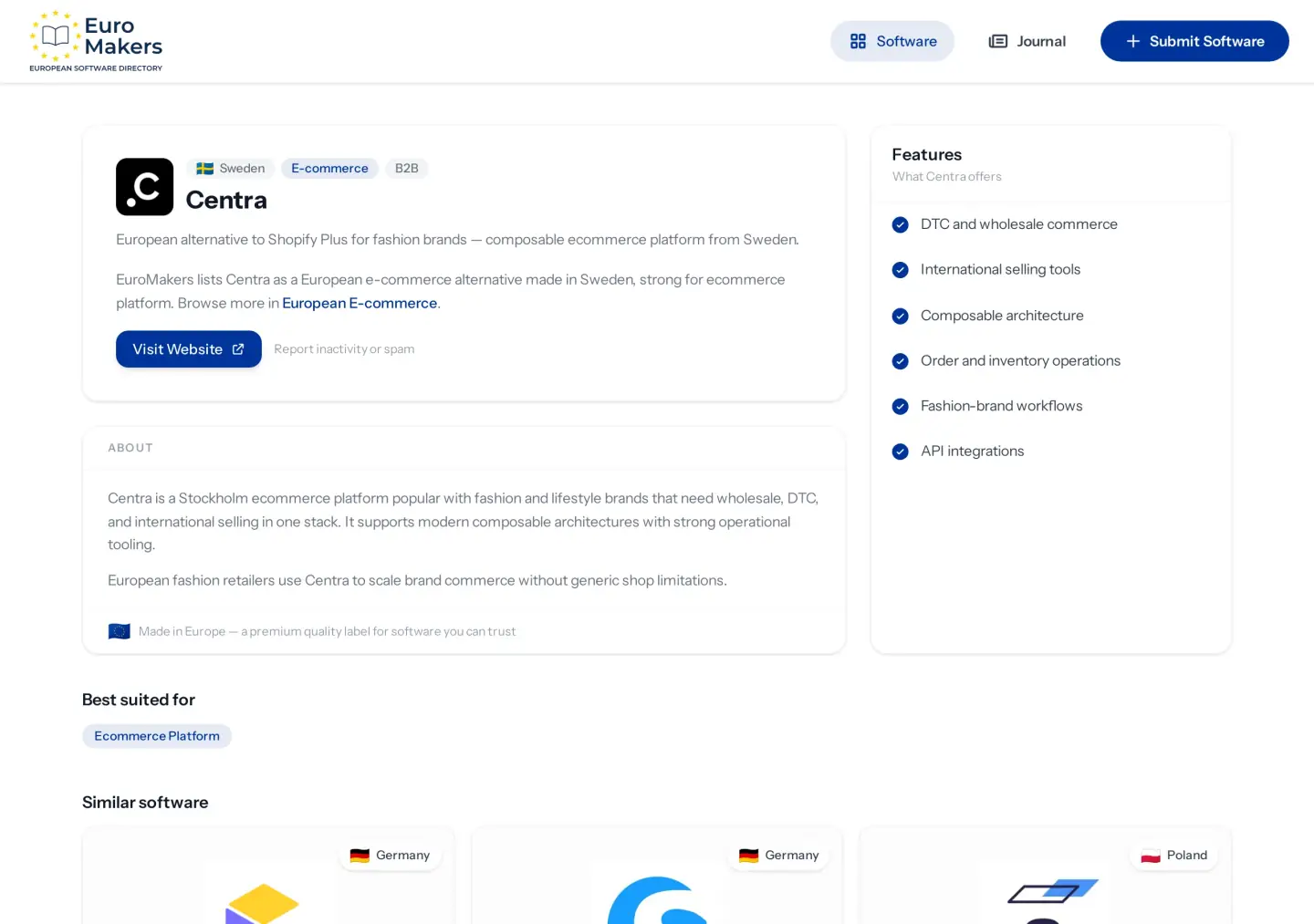
- Fashion. Direct-to-consumer and wholesale sharing stock, with international selling a brand team will actually run? Centra is the Stockholm fashion house.
None of those sentences ask which European shop is "best." They ask what selling you are hiring for. Made in Europe is the quality bar — craft, restraint, and products shaped by makers across the continent — not a rule that one vendor must own every cart.
When the storefront looks European and Tuesday still does not open
Shop stacks bounce when too many crafts arrive at once and compete for the same catalogue. The shelf looks European. Tuesday still feels unfinished.
- A window pretending to be a warehouse. Storefront layers make the customer path fast. They rarely replace catalogue, checkout, stock, and refunds. A beautiful window on an empty warehouse is still empty.
- A fashion house stretched into every aisle. Wholesale plus a public site is a real job for brands that live in seasons. It is a poor substitute for a German mid-market house or an SME module store outside fashion.
- A framework bought as a boxed store. Custom Symfony or GraphQL engines finish unusual workflows. They are slow, expensive answers when you mainly needed catalogue, payments, and shipping this month.
- One European logo for every selling job. House, open-source store, framework, window, and fashion house are neighbours — not the same aisle. Buying one product for the whole store is how Tuesday stalls three times.
The shop that stays open is the one where house, window, and fashion house stop pretending to be the same aisle.
Open the aisle that already hurts
If you are assembling the shelf from scratch, do not open five trials in the same week. Borrow the sticky-swap rule: one deliberate European swap that survives an ordinary Tuesday.
- Start with the craft that already hurts this month — the catalogue that never launches, the storefront that never ships, the wholesale season that cannot share stock, or the custom checkout no theme will hold.
- Move a small live set for ten working days: one collection, one market, one wholesale season, or one storefront path — not every SKU.
- Keep neighbouring crafts still. If you are trying PrestaShop for an SME store, leave Saleor and Centra alone until that hire feels boringly reliable.
- Only then add the next empty seat when a different job is loud — a window, a fashion house, a framework — not because another platform looks impressive in a storefront demo.
Pain first. One craft second. Neighbours later. Each hire gets a fair Tuesday before the next cart arrives.
Specialists under one quality bar
Unlike mail, vault, and tunnel — where Europe's clearest suite story can hold several nearby jobs — a shop rarely wants one house for every selling craft. That is the honest shortlist pattern from suite or shortlist: coherence where jobs sit close, specialists where they do not.
Hire by craft, not by catalogue size. Shopware when the job is an ambitious house. PrestaShop when you need an SME store you can own. Sylius or Saleor when no boxed theme will hold the workflow. Vue Storefront when the missing piece is the window. Centra when fashion wholesale and the public site must share stock. Germany, France, Poland, and Sweden specialise under one Made in Europe quality bar — craft you can keep, not five logos fighting over the same cart.
Neighbours that look like bigger shops
API platforms for large brands, developer commerce kits, checkout rails, and content houses look like bigger shops from a distance. Up close they are neighbouring crafts. commercetools is the Munich seat for assembling buying journeys from APIs at brand scale — not a louder Shopware. Medusa is a Copenhagen developer kit that lives in Developer Tools — a neighbour, not a ninth warehouse.
Leave the rim alone while the loud job is still a missing house, an SME store you do not own, or a fashion week that cannot share stock. One finished hire beats two half-moved catalogues.
Sibling furniture stays sibling furniture. Checkout, campaigns, catalogue search, and a sales pipeline are not bigger shops — they are different rooms. Return to Mollie or Adyen in the finance tools guide when money at the till is the stuck piece. Return to Storyblok in the marketing tools guide when pages never ship. Return to the search, delivery, and observability guide when the catalogue cannot be found. The CRM guide holds the pipeline. For the week around the shop, read The European company week that holds together.
A Tuesday you can actually open
- List every shop product you currently pay for or leave half-installed.
- Label each one house, open-source store, framework, window, fashion, or rim — or "noise" if you cannot name the job.
- Keep one clear hire per craft. Retire duplicates that share the same Tuesday.
- If a craft is empty and already painful, open the E-commerce category and shortlist two European options — not seven.
- Trial only the noisiest empty craft for ten working days. Leave the rest of Europe on the shelf until this hire feels boringly reliable.
"Made in Europe" on a shop shelf is a premium quality label — fewer abandoned platforms, fewer tools competing for the same cart, more Tuesdays that actually open. German houses, French stores, Polish frameworks and windows, and a Swedish fashion house can share a European week without pretending to be the same product. Use the Journal to choose the shape of the shelf, then use the directory to fill the seats. If a craft still feels thin for your hybrid, tell us.
House. Open-source. Framework. Window. Fashion. Hire the crafts. Keep the shop open.
Esmaspäevane kokkuvõte
Euroopa parim uus tarkvara, igal esmaspäeval.
Parimad esitlused, uued kirjed ja lood Journalist. Üks e-kiri, vaiksetel nädalatel jääb vahele.
Find your next European tool
Every product in the directory is checked before it goes live and shows where it’s made. Start with a tool you use today.
Explore the directory
